

Today is World Cancer Day (apparently we’re having all the awareness days this week!).
The hashtag for the day is #ActOfUnity.
I think it’s wonderful that people are coming together to stand in solidarity with cancer sufferers. Cancer is scary, cancer is a life-wrecker, cancer is, let’s be honest, a bit of a dick.
I struggle with days like this, because thoughts go round and round my head: ‘why did others recover?’, ‘why didn’t Mum?’, ‘why did this happen?’, ‘why isn’t she alive to say “I kicked cancer’s bum”’, ‘why did this happen’, ‘why, why, why’. Then I feel angry, frustrated, and go and look at puppies or something instead.
My plea, for this World Cancer Day, is that in your ‘unity’, you include friends, family, and carers. Not just those ‘actively’ affected, but also those who have had someone close to them die from cancer. In fact often, a few months after the person has died is the time when they need more support, because that’s when the busyness ends. When you’re not spending your life running between hospital/uni/work/home/sleep/appointments/everything, and then home/crematorium/funeral planning/funeral/family/uni/sleep, that’s when everything hits you. It doesn’t just hit you once, either, it hits you time and time again.
When Mum was diagnosed, I remember emailing a well-known cancer support charity asking what help they could offer me and my family. Their response? They couldn’t offer anything unless the ill person triggered it (and Mum wouldn’t have done that – her and Dad decided given her job we had a lot of support already). I understand where my parents were coming from, I understand that the charity has to have cut-off-points, but it was still a tricky response to hear, particularly because if I had a pound for every time someone had told me to go to them over the last 3 years, I’d have a deposit for a mortgage. Everyone assumed they would offer help to those affected-by-extension. But they didn’t. Why was I left out of their compassion?
Cancer doesn’t just affect the ill person, it affects all of those around them, and it keeps on affecting them, even after the person is in remission, even after the person has died.
I didn’t used to get angry. I didn’t used to panic that my family were dying/dead. I didn’t used to feel sick when my phone went off. My asthma didn’t used to be this bad (a lesser-known side effect of stress). I used to be able to sleep in my childhood bedroom. I used to be able to be able to see cancer adverts on TV and ignore them. I used to be blissfully bumbling through life thinking I had all the time in the world left with Mum. I used to be able to get angry at her and know she wouldn’t leave. I used to be able to give her a hug. I’m terrified of leaning on anybody because if your Mum leaves, then who won’t?
I’m not writing any of this to make anyone feel sorry for me, or because I want anyone to offer me life-changing advice. Life happens. There’s nothing anyone could have done to prevent or cure Mum’s illness. I’ve had a lot of support through it, even now, because I’m really, really, lucky. My family are wonderful, Hope Support do a group Facebook chat every two weeks, my GP continues to either help me through life, or drag me through it depending on what mood I’m in, the welfare tutors at uni were brilliant, uni counselling helped a lot while I was there, my uni college administrator is an excellent hug-giver, I have some incredible friends who understand that sometimes I need to talk, sometimes/always I need to craft, and sometimes I need to just be quiet, and my work are super supportive.
Having people around you makes such a difference, even if you don’t want them around you, just knowing that they’re there can help.
So this World Cancer Day, please do unite. But please don’t limit that unity to those with a cancer diagnosis. Please stand in solidarity with the family and friends of those affected by cancer. Please stand in solidarity with those in remission from cancer. Please stand in solidarity with those who’ve had a loved one die from cancer (however long ago it was). Cancer doesn’t just affect people while it’s happening, it affects them for the rest of their lives.


 I was admittedly somewhat sceptical at first. To start with, I’m scared of technology. For someone who blogs, and spends too much of their life on Twitter, I’m not all that good when it comes to apps. I only got a phone that doesn’t freeze about a month ago, my brothers frequently despair at my complete inabilty to understand Snapchat, and I have been known to reply to a text two weeks later – you get the picture. So you could say I’m a bit of an app novice!
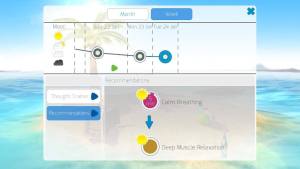
 doing, what you’re thinking, and whether there’s another way you can think about it. After that it makes certain recommendations on activities you can do within the app. It repeats this exercise every day, and eventually builds up data which can help you identify how your mood has changed, what might have contributed to your mood being that way, and how else you could think about things
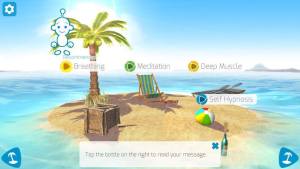 With regards to the activities themselves, there are a few different ones you can try. A lot of them centre around breathing and relaxing. I am a hater of mindfulness in the typical sense – I always focus on my breathing, forget to breathe, and get more stressed (not ideal!), but I must admit, the tasks were pretty relaxing, and focusing on the little guy on the screen really helped because it meant I didn’t forget how to breathe. I did it before bed one night and it was really good because it relaxed me enough to begin heading off to sleep (and I’m someone who has a lot of problems sleeping).
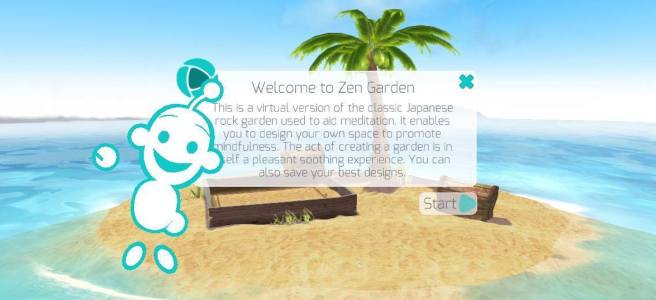
 cute. It just pops up with a nice little message or quote every now and again. There is also a ‘zen garden’ which is a little app-based sandpit – you can fill it yourself with water, shells, a sandcastle, a starfish, and you can rake the sand. I found myself spending a fair bit of time listening to the music, raking the sand, and completely chilling out.
 I don’t know how much this app has helped me on a large scale – I think that would be difficult to quantify over a few weeks. I also have a lot going on in my life at the moment and a long history of illness which does make things a bit more tricky. However, I would say that it’s really good for helping you to manage your breathing, to slow down a little, and to de-stress. I think that the daily mood-and-activity check in could be really useful – you could even share it with a counsellor or mental health team. I like that it refers you to your GP if it feels as though that is necessary, particularly because it doesn’t just flash up once (it’s very easy to press ‘x’!), but a number of times.




 Naomi Jane