Race for Life 2015

On Sunday, I’m taking part in the Harrogate 5k Race for Life with four of my friends as ‘Team Fiona’, named after my Mum. These lovely people have stuck by me since Mum’s diagnosis providing listening ears, a comfy sofa and unlimited hugs. Each of us has our own reasons for taking part so here’s a quick post to share with you all why this race is important to us.

RFLBBeth: I’m taking part in the Race for Life for Cancer Research UK to raise as much as possible for this amazing charity. In the UK, one in two people born after 1960 will get cancer during their lifetime. I’m not great at maths, but that’s half of us. In the 1970s, only a quarter of people survived cancer. Today, more than half will survive for at least ten years all due to excellent research funded by charities like Cancer Research UK. Let’s make sure this progress continues!!
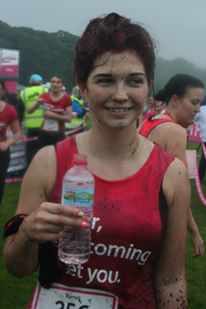
RFLGGrace: I’m taking part in the race for life for two very special people I know who are currently battling cancer, Fiona and Graham. Such events raise awareness and much needed funds, uniting the nation in the battle against cancer. I will feel proud to run the race for these two incredible people and hope that our efforts will one day help to eliminate this devastating disease.

RFLHHarri: I’ve known the Barrow family all of my life. Naomi and I have been friends since we were weeks old, so I can’t remember a time without her, and Fiona, in my life. It’s very important to me to run this race to prove to Fiona that I can do it. I also want to raise money so that Cancer Research can keep researching treatments and less people die from cancer in future.

RFLNNaomi: I ran the race for life with Grace last year and it was awesome. I wasn’t sure that Mum would still be with us for the race this year, but she is and that’s even better! Whilst running this race is not going to ‘cure’ Mum, it makes me feel like I’m doing something in what can often seem like a hopeless situation. I hope that raising money for Cancer Research, will enable them to continue their work, so less people receive the devastating news that someone they love is going to die from cancer.
RFLS
Sarah: The reason I’m running is because there’s no reason not to. It’s such an amazing experience to know that the money you raise WILL help people. I’ve never been involved in a charitable cause where the support for it is so unified before. Everyone is affected by cancer; directly or indirectly. So there’s no reason not to support the cause. But I want to live in a world where cancer is rare, not expected and not just accepted as what happens.

Now that you know why we’re doing this, please consider sponsoring one (or all!) of us for the race this Sunday. Any donation, big or small, helps Cancer Research to continue their incredible work. For our individual fundraising pages, please click our names. Our team page is here. You can also donate to my page by texting ‘RFLN94 £[amount]’ to 70070.

Carers Are Hidden Heroes

Carers Are Hidden Heroes

At the moment, there seem to be a lot of days and weeks dedicated to raising awareness of various issues (or celebrating donuts), encouraging people to share their stories and tag their friends. But how much awareness can be raised before it all fizzles into a blur of “share this”, “read that” and “use this obscure hashtag please”?

This week is carers week. I think it’s important to highlight this because carers are amazing. They are hidden heroes who care for loved ones day and night, often without a break or a holiday away from these responsibilities.

There are almost seven million carers in the UK of all ages, genders and ethnicities and that number is rising: at some point in their life, three in five people are likely to be a carer. Currently, about 700,000 of these carers are young people – children and teenagers who are caring for a parent, sibling or someone else every single day. Though many of these children wouldn’t wish to lose this responsibility entirely, because they love the person they’re caring for, it can mean that they lose aspects of their childhood; time that should be spent playing with friends or being a kid is spent instead shouldering more responsibility than any adult could reasonably ask of a child.

You can’t tell that someone is a carer by looking. They often go unnoticed, quietly getting on with things. Many might not even recognise themselves as carers, so their friends and family are almost certainly not going to pick up on it. Despite the lack of recognition, they carry on every single day; administering medication, completing personal care, cooking, washing, cleaning, and more. All of these things would cost a fortune if a care worker had to be employed to do them, but carers do them every day with no regular wage (apart from potentially some carer’s allowance). Unlike a paid worker, there’s no annual leave, no bank holidays, and no TOIL. Carers save our country huge amounts of money by simply loving and caring for a family member or friend.

My Dad is a carer – he cares for Mum. We’re lucky in that Mum is relatively independent at the moment, she can do most things herself. But she still needs help here and there, and that’s where Dad comes in. Sometimes I imagine Mum finds it difficult to accept this help, because she’s always been incredibly independent – imagine how frustrating it must be to realise that the simple things you’ve done yourself for your whole life, the smaller things you really take for granted, you now can’t do without help.

I wouldn’t class myself as a carer; I’m at university, so the only person I’m really looking after is me. I do worry about Mum, I keep in touch with everyone at home as best I can, and I’m forever waiting for the dreaded phone call, but I don’t have any regular caring responsibilities.

When I’m home I try to help where I can: walk behind Mum when she’s walking up the stairs, help her to reach things, cook and clean, other bits and bobs like that. But I don’t see it as an ‘extra’ or ‘caring’ responsibility; I see it as part of family life. I imagine many people who are carers feel the same and that is why they so often go unnoticed.

Keep your eyes open this week (and beyond). If you know someone who is a carer, or you think someone you know might be a carer, make contact with them. It’s hard to maintain friendships when your life revolves around medication charts and routine meal times. Invite them round for coffee, or go round to theirs. Ring them for a chat, drop them a Facebook message. Don’t go overboard by any means, just initiate contact. It doesn’t cost anything but will mean the world to someone who is tirelessly caring for someone they love.

Carers are incredible, they really are. They are hidden, hardworking and humble. Please try and notice them this week. Please reach out to them. If anyone deserves an hour of your time, it’s them.

Featured: http://www.huffingtonpost.co.uk/naomibarrow/carers-week_b_7536544.html

Making Difficult Decisions

University is about more than just a degree. It’s about making friends, trying new things, and becoming independent. Personally, I love it. It’s given me a chance to escape from my teeny-tiny village (you can’t walk down the street without every man and his dog knowing about it the next day), and brought some fantastic opportunities. A major part of it for me has been about moving away from home. I’d taken a gap year prior to uni where I stayed at home working for various charities, and as much as I enjoyed it, I was looking forward to spreading my wings and having a chance to indulge in some self-discovery.

Despite some homesickness, I only went home a few times during the first term of my first year. By Christmas, I was more than ready for some TLC and a break from washing up but going into second term, I was determined to be more independent, go home less, and rely on my parents less. Then Mum was diagnosed, and that changed.

Half of me desperately wants to be a ‘normal’ student. To abandon my parents, make stupid mistakes and stay up too late most nights. I want to join my friends on nights out, spend weekends exploring the city and forget about my life back home.

The other half of me is different. At the time of diagnosis, Mum had somewhere between four weeks and four years to live (I know in movies they always have a definite length, but that’s not how it is in real life). My friends will probably have their parents waiting for them when they graduate. They can forget their Mum’s birthday, lob some flowers in their general direction a week later, and hope that makes up for it. If they get pregnant, they can reach for their Mum every time something freaks them out. Once their family has grown, they can visit with the grandchildren, using their parents as free babysitters (it’s cheeky, but it’s allowed, right?).

But for me it’s different. Mum probably won’t still be here when I graduate. She will probably die whilst I’m still at uni. I have to cram twenty or thirty years of visits into twenty or thirty days/weeks/months. I have to ask all my questions now; predict what I might want to know in years to come. Each birthday might be Mum’s last, so rather than forget it I want to make it special.

Should I continue to be as independent as possible and stay away from home, or should I return most weekends and spend time with my Mum? Should I spend my evenings binging on TV shows with my friends until 2am or making memories with my family? Will I regret not spending more time with Mum when she dies… or will I regret not spending more time at uni when I graduate?

There is no right or wrong answer to this. There isn’t a guidebook. There’s nobody to tell you what to do. Uni is different from school where you come home and see your Mum each night. It’s not like work where you’re home evenings and weekends (and even if you have your own house you can probably drive and visit your parents). University is an all-encompassing bubble and (for most) a once in a lifetime experience.

Every day I question my decisions and most nights I worry about whether I’m getting it ‘right’. Currently, I spend most of my time at uni, but speak to Mum on a regular basis. I go to her when I need advice or have a stupid question, and being able to do that is so wonderfully special. When I see her I cherish those moments and we take tonnes of photos.

Nothing is permanent in life and I’m lucky to have the chance to prepare for my Mum’s death where many don’t. That doesn’t make it any easier, but it’s something I have to be thankful for. Every day we all have to make decisions; some are bigger than others. I just hope I’m making the ‘right’ ones.

Featured: http://www.huffingtonpost.co.uk/naomibarrow/terminal-cancer-planning_b_7467058.html

Nighttime Thoughts

I have a hole in my stomach.

It’s horrible, achy, painful and black. It expands and contracts as I breathe. It’s getting bigger and I’m scared it’s going to swallow me whole. I believe it’s called grief, but that seems such a small and insignificant word to describe a feeling so big and all-consuming.

Tonight, I spoke to Dad. I rang him up to discuss a website and various other bits and bobs. My uncle had sent me a photo of the family from the weekend. I enquired who a few people were (I get confused by distant relatives) and asked after Mum – she looked small and tired.

She’s sleeping more. Her bloods are fine. She’s just tired. There’s no point in scans now so we don’t know how the disease is progressing unless there are markers in her blood results. I guess her body is just tired of fighting this crap.

We spoke about summer. We don’t know how well Mum will be then… if she’s still with us then. Once again it hits me in the stomach, ripping me in two. Sometimes I forget for a moment – but never for long. Grief doesn’t allow that. Cancer doesn’t allow that. It doesn’t let you forget. As soon as your drop your guard, even for a second, it will strike again.

I spoke to my brother. I had to explain who the family members in the photograph were, how they fit, who they’re related to. It occurs to me that we might not only lose Mum when she dies.

Nights like these I don’t know what to do. Crying seems so pointless, yet often it just happens and I’m left exhausted when it finally stops. I want to curl up, I want a hug, I want someone to tell me it will be okay; thinking like that reminds me of being younger when Mum or Dad would stroke my hair and tell me it will be okay. But they can’t right now, because they’re not here, and it won’t be okay. I want to run and run; to keep running until I can’t. But realistically, it’s gone midnight, I’m crying – it probably wouldn’t be the safest idea.

So I’m left in a state of confused grief; clinging onto hope that we might have a few more weeks or months whilst attempting to accept that we probably won’t. I feel utterly lost and alone in this strange situation. Imagining a future without Mum seems impossible, I’ve never known a life without her and thinking about it sends me into a state of turmoil, so I don’t.

I wish I had someone to talk to who knew how this felt. My brother has gone to bed. I don’t want to burden my friends – I’ve been banging on about this cancer thing for over a year now and I imagine they’re getting bored of it. They have their own issues too, their own lives. I live with a cancer cloud day in, day out, but they shouldn’t have to, too.

Someone sent me a list of organisations in my area the other day. I look through them. There’s some ‘bereavement support’, but I’m not bereaved (yet) so that’s no good. There’s one for parents, siblings and grandparents. I am none of these. It only serves to make me feel more lost and alone. I know there are no words that can fix this. I know that it has to hurt, but sometimes hurting with someone who understands, instead of hurting alone, can help.

It’s half two, now. I’m hoping to get a night of unbroken sleep but I can’t remember the last time that happened. Lately I’ve been going to sleep with the radio on; it feels less lonely. The darkness can be scary when all you have are your thoughts, sometimes it can feel like you’re the only one in the world.

There’s no grand meaning to this post. No take-home message. It’s just me, speaking to you, whoever you are. Thank you for listening.

Not Like The Movies

Nobody tells you that terminal cancer is not like in the movies.

You can’t put your life on hold and all gather around the sick person. It doesn’t work like that. You have to carry on with life, living each day as well as you can. Never able to fully forget or let go; your hand permanently attached to your phone, waiting for the next text or phone call.

Nobody mentions that cancer isn’t linear. You can spend a weekend with an unresponsive parent; coming to terms with saying goodbye… and then they come back to life. Nobody can tell you how long they’ve got left. You always have to be prepared.

Nobody warns you that you will lose friends. Because transitioning between real life and hospital life becomes too hard. Hospital feels clinical and safe and moving back out into the world is overwhelming. They don’t warn you that you will be so tired from traveling back and forth, from holding yourself together and being there for everyone else that you forget to reply to texts. Friends become strangers.

Nobody talks about how traumatic it is. The nights spent curled up, crying, wondering if life will ever settle again. They don’t talk about how the dying person tries to leave you with bits of them. How they plan 30 years into your future whilst you’re struggling to accept the now. They don’t talk about what happens after death; when the person is gone and you have to develop a new normal.

Nobody can ever understand what it’s like, unless they’ve been through it. How your whole life can be on hold but also moving so fast. How you learn to play a part, act out a role, paint the right picture. They can never understand how much it physically and emotionally hurts, or how your whole body can cry.

Nobody warns you that it’s not like the movies. You can’t switch off when you start crying. You can’t pause it when it gets too difficult. There are no balloons, no presents from big companies, no meetings with famous people. There is just you, your family, your friends, and your loved one attempting to make some sense of a situation which has no meaning. Working together to find some peace, acceptance, and the courage to keep going.

Deceiving ‘wellness’

Mum1

I posted this picture on Facebook last week. Everyone keeps commenting on how well my Mum looks. How she’s amazing. How strong we all are.

My Mum is amazing. She was comatose a few weeks ago and we thought she’d die. She very nearly did. Since then she’s regained some mobility, knitted two baby cardigans (ready for if my brothers and I ever have kids), proof-read two essays for me, been to the cinema a few times, shared lots of laughter, given me hugs, and shared many happy moments with friends and family.

But Mum is by no means ‘well’. She’s a heck of a lot better than she was when she was in hospital, but she’s not well. She has terminal cancer; it has invaded her body and stolen her health. When you look at the pictures and see us smiling together, we are happy and we are enjoying the time we have together, yes, but pictures can be deceiving.

Mum and I spent a lovely day together on Friday , we were happy and enjoying ourselves. However, what you don’t see is that she’s sleeping for 15+ hours a day. You didn’t see her walking into the building with her stick (she’s come so far – a few weeks ago it would have been a frame or wheelchair). You also didn’t see her not finish her meal, or notice how much weight she’s lost. You didn’t hear me ring up before the event to check access requirements – there has to be a disabled toilet and can’t be too many stairs. A year ago my Mum was climbing hills with us in the Dales, that’s just a few examples of how cancer can affect a previously fit, healthy, woman.

You didn’t see me worrying the day before because I hadn’t seen Mum in a few weeks and wasn’t sure where her health would be. You didn’t hear my Dad and I discussing life, death and health all the way back to uni. You didn’t see me crying on Saturday night, because I found similar pictures of us from 14 months ago and the difference shocked me.

I love my Mum and I’m so glad she’s still with us. She’s amazing and she’s come so far. Compared to a few weeks ago, she really is ‘well’. But please don’t assume that she’s better, or recovered. She’s not going to recover and she’s not going to get better. She is dying, however much that’s a taboo word and however much people don’t want to talk about it. Don’t hold out false hope, because it will only be harder when she goes downhill again.

Why am I blogging this?

I was going to wait until after essay hand-ins before I started blogging about this, but as it’s Dying Matters Awareness Week, (check out #YODO on Twitter) now seems like a good time.

My Mum is awesome. She’s brought up three kids (and I reckon we could have turned out worse!), had an amazing career in palliative medicine, volunteered for the church and sold Fairtrade for years, taken part in various exercise-related things, and still found time to attend a gossip/book club and spend time with her friends.

Unfortunately, in February 2014, she was diagnosed with terminal cancer. It’s a fairly crappy situation, but we’re lucky to have some amazing family and friends around us to support us, so it could be a lot worse!

Why do I want to start blogging about this? Well, considering that cancer is something which will affect most people at some point in their lives – it’s still a bit of a swear word. We don’t talk about it! I don’t know if that’s because people think that they’ll contract it if they talk about it (don’t worry – that’s not how it works), or they just don’t know what to say, or quite what. It’s in movies/films a fair bit but in all honesty I think I’ve only ever seen one that comes close to explaining what cancer is really like.

As a young person living with a parent who has a terminal diagnosis, I’ve discovered a fairly considerable hole in the people-dying-support-system stuff. There is a lot of support out there for children with a close family member who is dying; there is a fair amount of support for spouses and for parents of people who are dying. But not really anything for those of us who are adults-but-not-really, i.e. those of us who are over 18, but still haven’t quite worked out what a mortgage is and see cereal as an appropriate dinner (fairly sure this lasts until you’re around 25, correct me if I’m wrong).

This is incredibly isolating. I’m really lucky to have two brothers and a Dad who I can chat to, a great uni welfare team (and a very understanding academic department), and some wonderful friends. Furthermore, because of Mum’s previous job, a number of our family friends understand the whole palliative medicine thing a lot better than I ever will. But unless you’ve actually been through it, or are going through it, you don’t quite ‘get’ it. Don’t get me wrong, I’m immensely grateful for all the people we have around us and I wouldn’t be without them, but sometimes there’s no substitute for someone saying ‘I get it’ and knowing that they really do.

So I’m writing this for a few reasons. Firstly, I’m hoping it will help me process things, I find writing very cathartic at times. But the real reason I want to write this is to reach out to others in a similar position to me. Those of us who are attempting to work out life whilst trying to understand death. Because I don’t believe I’m the only one in this position.