Ten Tips For Surviving Uni When Someone You Love Is Dying

Packing up your bedroom and going to uni is exciting and scary whether you’re going into your first year, or subsequent years. Packing up and heading off to uni and leaving behind a parent (or other family member) who is dying brings a whole host of new challenges and worries.

My brother and I have put our heads together to try to come up with some top tips for being at uni while a loved one is dying. We’re not experts on the subject, but we have a few ideas after going through it ourselves.

I learned of Mum’s terminal diagnosis midway through my first year, my brother learned of it during his final year of school and attended a different university from me for his first year, last year. Our advice won’t suit everyone and some things will vary between universities, but we hope that these tips give you a few ideas, make you feel less alone, and put your mind at rest a little.

  1. Let the relevant people know about your situation as soon as you can. This may include pastoral care networks, college/welfare/halls tutors, those in charge of mitigating circumstances, and your academic tutor. This way, if a situation arises where you need to use these resources, it will be much easier to access the support you need, and don’t be afraid of asking for help when you do need it.
  2. Apply for mitigating circumstances if you need them. Nobody will shout at you if you end up handing a piece of work in late because your loved one was in hospital – but you need to let them know why that piece of work is in late, rather than having them assume that you’re just a ‘typical student’.
  3. Find a friend or a neighbour and let them know what’s going on. Sometimes you may need someone to help you look out for your wellbeing. It might be that they pop in every now and again and make sure you’re eating and sleeping, or make sure you engage with the more social aspects of uni from time to time if that becomes a struggle for you. Even regular Nandos visits with certain friends can be a real lifesaver – sometimes it’s important to have things to look forward to.
  4. Go to your lectures. Sometimes your mind will be full and the last thing you’ll want to do is go to a lecture. Go anyway and try to take some notes. Your mind might not be with it in that moment, but later when you come back to the work it’s better to have some rubbish notes than no notes at all.
  5. Stay in touch with your family if you can. It might be through emails, letters, phone calls, or carrier pigeon. Dad used to write me weekly letters about family life and a bit about Mum. Nowadays we mainly communicate online or by text.
  6. Find your local carers centre. See if they have a young adult carers (YAC) group. Even if they don’t have a specific YAC group, see if the carers centre can help you out. They can often provide a chance to chat with others facing similar issues and it can be really helpful.
  7. Don’t be afraid to go home. Lots of people may tell you not to go home during the first term (or at least half term) of uni, but it’s okay to want to: Your loved ones condition can change, and you may well want to spend more time with them if you can. I know I certainly had to find a balance between the fierce desire to get away from home as fast as possible with wanting to spend time with Mum while I still could It’s not an easy balance, it takes time to work it out, and it often needs reassessing, but that’s okay.
  8. Have fun! Just because somebody at home is dying, it doesn’t mean you can’t go out, it doesn’t mean you can’t drink, it doesn’t mean you can’t join a sports team, get stuck into societies or become a volunteering whizz. Make the most of uni while you’re there, it passes faster than you’d think.
  9. Don’t struggle on alone. If your grades are dropping because you’re too upset to leave your room and go to lectures, tell someone. If you’re missing deadlines due to spending time in hospital, tell someone. If you’re beginning to feel that you can’t cope, let someone know, because there are options and there are things that can be done.
  10. Look for help online. If you’re struggling with offline help, try looking for some online support. Hope Support Services offer online counselling for those who have a terminal illness in the family. Carers UK have lots of information on their site, and Marie Curie have lots of information as well as a helpline you can call. There are loads of resources out there even if they can take some digging to find. Lots of services will be local to you, so have a quick google.

Unfortunately, we can’t give you a step-by-step guide for being at uni while someone you love is ill. Every person, every diagnosis, every uni and every course is different, so we wouldn’t even know where to begin. Enjoy uni: make mistakes, stay up too late, meet new people, discover the city, perhaps even do some work(?!)…who knows that the next year might bring. The most important thing to remember is that there is no ‘right’ way to cope with terminal illness; you need to work out what’s right for you. Stay strong, and best of luck.

Featured: http://www.huffingtonpost.co.uk/naomibarrow/freshers-week-advice_b_8203948.html

Chatting About Funerals in the Car

Mum is dying. I know we’ve known this for a while… but it wasn’t so obvious at first. But now she’s dying, I can see it.

I’ve only been away for a week. I popped back home tonight for some tea (my brother had been to open day at our uni, it made sense) and the change in Mum in just a week is far too noticeable for my liking. Her energy levels are lower, she’s fading into the chair more…and needing to use the chair more to help her sit up. It might not sound much, but she was already so slow I didn’t think slower was possible, yet here we are.

She knows it too. Tonight has consisted of an extra request for a hug, a conversation about money, another unfinished meal. The green bowl permanently resides next to her chair now as episodes of nausea increase.

I hate this stupid disease. I often filter my blogs, try and put a positive spin on things, keep my head up. I am generally a positive person and those if you who know me will know that I always try and make the best out of a bad situation. I often doubt myself, but my Dad always tells me I’m stronger than I think.

Tonight it hurts, physically, and I can’t describe it properly because it’s unlike any other hurt I’ve felt before. It starts in your chest and spreads through your shoulders, your stomach and your legs. It clamps your throat shut and forces tears out of your eyes. It doesn’t let you ignore it, if you try it just gets stronger.

I don’t want my Mum to die. I want this horrible limbo to be over but I don’t want her to die. I want her to wake me up on a morning by stroking my hair and I want just one more strong hug. I can’t keep writing because I don’t know what else to say. I’m just sad.

Thinking Out Loud

Pretty much all summer long I’ve been itching to move back to university; I’ve complained about the mess in the house, the lack of independence, the lack of cashpoint within fifteen minutes of the house… pretty much everything. I’ve made a home for myself in York, and the house where I grew up doesn’t feel like home anymore.

Somebody asked me last week if each time I said goodbye to my Mum I thought about whether or not it would be our last. The very quick answer to that question would be ‘no’. When Mum was first diagnosed, I did for a while, but not anymore. Can you imagine living like that for 18 months?! You’d drive yourself insane. Furthermore, any time I say goodbye to anyone it could be the last time I see them. Accidents happen all the time and we never know what life might decide to spring upon us. (It’s morbid, I know, but still true).

I think I’m struggling to accept Mum’s declining health, and I’ve got to the stage where I’m just running away from it. If I’m not at home, then Mum’s health stays where I last left it. If I’m not seeing her every day, her disease is halted in time. Without seeing her condition change, I can pretend that it doesn’t.

When I’m at home, I can blame the loneliness and isolation I often feel on living in a tiny village and not being able to drive, which limits opportunities to meet with friends. But back at uni, I’m confronted with the truth that the lonely ache I feel is for the Mum that I grew up with, and that pit in my stomach only grows if I think about the number of friends I’ve lost since Mum became more ill.

I long to be able to walk through the door and see Mum chatting away whilst unloading the dishwasher, or cleaning up after baking a cake. I have dreams where I’m walking around Tesco with her. I wish that I could go clothes shopping with her, and walk around various shops all day arguing about socks, or something equally ridiculous, and having ‘lunch’ at a coffee shop (it feels like cheating to say hot chocolate and a piece of cake count as lunch, but it was our thing, so who cares?). But I can’t do or see these things anymore, and I never will again.

After a busy morning on my first day back at uni, I sat down for a moment, and I cried. Rather than the stupid, sniffly, ‘I’m not really crying’ crying, though, I let myself go and just cried properly. Mum might not be dead, but I’m grieving right now and I’ve been grieving for a long time – grieving for the life and the Mum I once knew. The boundless energy and busy nature of Mum as I knew her when I was growing up could not be more different to the shadow of her that sits, sleeps and watches TV for most of the day nowadays.

The night before I left for uni this week, I said goodbye to Mum. She hugged me, but she is so weak and small now that it wasn’t like the hugs I’ve grown up with. I knew her arms were around me, but I barely felt it. The following morning I said goodbye again, and we had a perfectly ‘normal’ conversation, but she was still in bed (to be fair, it was half eight on a Saturday morning, but healthy Mum would have been up and about an hour or two before then).

These days I’ve gotten pretty good at fielding responses to Mum’s illness – I diplomatically answer everyone around me and aim to be positive and busy the majority of the time. When someone tells me that Mum’s illness isn’t fair, I shrug my shoulders and respond that life’s not fair. But I am angry. This disease is taking her life and our future with her and I can’t understand why it chose her. This cancer is not just taking her life, but it is affecting our family in ways that I’d never have imagined.

Anger is an important part of grief, but it’s not an emotion I find easy to cope with, especially when a lot of my anger these days is actually directed at cancer itself. I feel like this anger is useless, and won’t get me anywhere. I could let it sit and fester in me, but that would just destroy me. I have to turn it into something useful. So I channel it into the positive things I do everyday: I keep volunteering, keep campaigning, and keep trying to make the world a better place.

Featured: http://www.huffingtonpost.co.uk/naomibarrow/terminal-cancer_b_8149226.html

Dear Friend, My Mum Has Terminal Cancer

This post has been a long time coming. It has involved texts and Facebook messages from friends about things they’ve learned over Mum’s illness, things they wish they knew at the start and things they wish they knew now. It has involved thinking right back to the beginning and trying to remember how far we’ve come. I have a number of friends who haven’t been able to deal with this situation… and I’ve lost them. But that’s a post for another day. For now, this one is finally here.

Dear Friend,

I’m sorry to have to tell you this but mum has been diagnosed with terminal cancer. I’m sorry to tell you in such a blunt way, but there really is no other way to say it, and as I’ve had to tell so many people, I’ve got used to just saying it, now.

Please don’t cry to me. I know it’s rubbish, I know it hurts and I know it’s scary, but I can’t cope with your grief about my situation on top of my own. Please find someone who you can speak to about this; a family member, a friend. I don’t mind who, but please don’t fall apart on me, and please don’t keep it all to yourself.

First and foremost, I need you to remember that you cannot take my pain away. You can’t erase my grief. You can’t cure my mum. No amount of beetroot juice or yoga is going to do that. It’s in our lives and it’s never going away. Maybe in a few weeks, or perhaps a few years, cancer will kill my mum. This is never going to get better – in fact it’s only going to get worse. You can’t fix my mum, and you certainly can’t stop me hurting. But you can definitely be a listening ear, a shoulder to cry on, or simply someone who makes me laugh and brings some happiness to my day.

Please don’t stop talking to me about normal things. I want to know about your significant other and why they’ve annoyed you. I want to know about your sister and how she did in her most recent exams. I want to know how last night’s party was. I want to know the good, the bad and the ugly; to chat like we’ve always done. I need this normality in my life! Don’t think that mum dying makes your problems ‘trivial’ or ‘stupid’, because they’re not. They matter to you, so they’re important, and I always want to know the important things in my friend’s lives.

Don’t feel that every single conversation you have with me has to include mum. That’s going to get very boring very quickly. I have a life outside of mum’s cancer. I volunteer, study, work, go out with my friends and even knit monkeys from time to time. Sometimes I just need a break from thinking about all that stuff. Sometimes I just want to be the normal, 21-year-old me. So unless mum’s been especially ill lately and you’re enquiring as to whether she’s feeling better, or there’s something specific you’d like to talk about, just wait for me to bring it up. If you really want to discuss it then feel free to ask me stuff, but ask me how I am before you ask me how mum is. The order of those two questions can make a big difference to how the conversation appears to me.

I’m sorry if I don’t always reply to your texts nowadays. My life gets busy. Mum has to go into hospital sometimes and there’s no signal there, then I often come home, help with tea and go straight to bed because being with a terminally ill parent is exhausting. Even when I’m at uni, I’m often catching up on work I’ve missed or trying to do all of my work during the week so I can go home on a weekend, and I just forget to check my phone. Sometimes I might read your message, but my head is so full of everything that I forget to reply. Please be patient with me.

Don’t stop texting, though. I love receiving messages and knowing that people care. Don’t feel you need to text me every second of every day – that would be weird and annoying. Just contact me as much as you always have done.

If I seem to be struggling, and you become worried, talk to me about it.
Ask me who I’m speaking to and what support I’m getting. You could walk with me to the GP when I need to go and sit with me in the waiting room if you wanted. See if you can find a group or an organisation who might be able to offer me some advice, or help someone in my situation. Remember, there is no ‘right’ way to support me. There is no ‘right’ thing to say or do. I haven’t changed as a person. I’m still me! I just have a really crappy situation going on in the background.

Please don’t disappear from my life. I know this is hard. I know you don’t know what to say or how to act, but I’d much rather have you in my life saying stupid stuff and mumbling, than not in my life at all. There is no ‘right’ thing to say or do. That’s what makes this so difficult. So just be you, stay in contact, and don’t run and hide, because I’ll miss you.

Drop me a message if you’re ever worried or upset. Please ask me if you’re not sure whether something is appropriate. Please tell me if I’m upsetting you in any way or if I’ve changed and it’s worrying you. Just communicate.

Thank you,
Your friend.

Featured: http://www.huffingtonpost.co.uk/naomibarrow/terminal-cancer_b_8079376.html

Featured: https://m-community.macmillan.org.uk/Places/Application/Content/714424?applicationId=31108&applicationType=blog

Stop Glamourising Cancer

This week marks three years since cancer entered our lives. Mum was diagnosed with breast cancer at the end of August 2012, before getting the all clear in Easter 2013 and being declared terminal in February 2014.

This time in 2012, I was embarking on a gap year, one brother was about to start his A-Levels and the other was starting year eight. In 2013, we were on a family holiday in France, walking up lots of mountains, attempting to mountain bike down some others, and eating far too many baguettes afterwards. 2014 came, and Mum’s condition went up and down a bit, but we still managed to get away for a few days and head to the Dales for some beautiful walks.

This weekend, we were going to spend the day as a family, on the coast or at the Yorkshire Sculpture Park, but it ended up not being possible. Mum takes a while to wake up in the morning, so we wouldn’t have been able to leave until 2/3pm. Then it turned out to be super windy, and Mum wasn’t feeling the best she’d ever felt, and we couldn’t think of anywhere accessible to go that wouldn’t have a small hurricane nearby, so we ended up just staying in. We had a pleasant enough day (I baked enough to sink a small ship!), but it doesn’t hide how dramatically different our lives are now compared to how they used to be.

I was feeling pretty rubbish on Sunday night – overtired, and becoming increasingly angry at the whole existence of cancer, so I figured I needed to try to make my frustration productive in some way. I typed ‘terminal cancer’ into a site a lot of young people use to rant, get inspiration, and generally support each other through anything and everything going on in life.

Up came pages and pages of GIFs, screenshots and quotes from The Fault in Our Stars, broken up with the occasional bit from My Sister’s Keeper and Before I Die. Scattered amongst these snippets of carefully constructed Hollywood drama were the writings and cries for help from other young people who are attempting to come to terms with losing a loved one to this horrible, horrible disease, in real life.

It was then that something I’ve always thought on some level really hit me. I am absolutely sick of the glamourisation of cancer. The ‘Hollywoodification’ of terminal illness. The warm filter put on dying.

When people are trying to reach out for help, and the only experience their friends have of cancer is a watery-eyed, highly made-up Hazel-Grace (without any jaundice, oedema, peripheral neuropathy, bags under her eyes, weightloss, or anything else that might come with cancer – if it weren’t for her oxygen tank, she’d look completely healthy), staring into the beautiful eyes of the ‘it’s a metaphor’ Augustus Waters (who by the way, also has none of those symptoms) it’s not helpful. How is anyone supposed to come to terms with what they’re going through when this is the picture of cancer put before them?

I picked TFIOS out because it’s pretty prominent at the moment, but there are hundreds of cancer stories out there. Cancer is an easy illness to work with when scriptwriting; most people have heard of it, giving people a bald head can easily symbolise it, and the stages of cancer can easily be made to mimic the traditional three act structure of Western storytelling.

I have nothing against John Green or any other writer who writes about cancer, either in books, in films, or via some other medium; I would just prefer it if people didn’t treat the characters in these stories as if they were real people. I’d love it if people who wanted to know the realities of cancer read real accounts of living with cancer, either written by sufferers or those close to them, and if we could dispel these ideas that cancer is all bald heads, cake, trips abroad, and profound moments.

Ideally, cancer would disappear from all our lives forever, but sadly we don’t live in an ideal world. I hope that by writing about our experience of cancer, I can help people to gain a better understanding of terminal illness, and how it affects those involved, without resorting to Hollywood’s cotton-candy version of dying.

Featured: http://www.huffingtonpost.co.uk/naomibarrow/stop-glamourising-cancer_b_8047444.html?utm_hp_ref=uk

Social Media is a Carefully Constructed Facade

Yesterday, I met up with a friend. After a couple of hours of window shopping (and a little too much actual shopping – sorry bank balance!), we sat down for a drink and the kind of chat I wish were more common: a proper conversation. None of this ‘how are you, I’m fine thanks, how are you’ crap which most of us seem to spend the majority of our time reeling off because that’s what we’re expected to do.

We spoke a lot about all that’s going on in our lives. Both of us have great stuff going on at the moment, but naturally we’re also both dealing with things which aren’t exactly ideal, and we’re managing them alongside jobs, university, and some sort of vague attempt at a social life.

I spoke a lot about Mum; how she is, how the rest of my family are, how our house is, basically lots of cancer related stuff. My friend responded with words I’ve heard so many times in recent weeks: ‘I’d never have known’.

From so many people, for so many reasons, I seem to be hearing this a lot more than normal lately. ‘I’d never have known your mum dying affects how well you’re sleeping’. ‘I’d never have known it affects your studies’. ‘I’d never have guessed that ‘x’ was going on’. Usually accompanied with ‘you’re coping so well with this, I don’t know how you do it’.

If you look at my Twitter and Facebook, they paint a fantastic picture. I look after two lovely boys for four days each week, and you’ll see pictures of their various baking endeavours, their glittery creations and their muddy wellies, usually accompanied with something amusing that one of them came out with. You’ll see photos of volunteering things I’m doing: whether it be a selfie on a train to London, a photo of somewhere pretty I’m sitting, or something else, you can be sure it’ll be as photogenic as I could make it in the moment. And that’s before we get to the various updates about the revision I’ve been tackling, culminating with a photo of all my notes last week before my exam. There will be some jokes on my immediate family’s Facebook walls, conversations with other family on Twitter and every now and then a link to a news article I found thought-provoking.

But the stuff I don’t post on social media are the things that keep me up at night. The discussions I’ve had with Dad about Mum’s health. Worries about whether Mum will make it up the stairs tonight. How exasperated I feel that my family seem to have stopped leaving the house. The crying that comes when it hits me that Mum really is dying. The questions I mull over each day: ‘what will it be like when…’, ‘what about if…’, ‘how do I cope with…’. I certainly never post my fears about whether I’m coping well, if I’m making the right decisions, and what’s going to happen in the future.

The thing is, I’m not the only one. If I did start posting all of that stuff, kinder people would think it was quite odd, and less kind people would probably react with hostility – how would you react if this popped up on your feed: “crying because I just walked past people graduating and Mum probably won’t be around when/if I graduate”?

I have a number of friends going through a lot of tough situations at the moment. Physical health problems, mental health problems, family issues, you name it. I have friends in hospital, friends who’ve recently received difficult test results from their GP, and friends going through family break ups. If you looked at these people’s social media profiles and then they told you about these issues, you’d probably say ‘I’d never have guessed’.

More than any other area of our lives, social media lets us choose exactly how much or how little we say to the wider world about our lives. No-ones social media profile can fully represent that person – after all, how do you capture a human personality in 140 characters, or a well-filtered selfie? And that’s before you get to the unwritten social rules on what you can and can’t post – don’t cry for attention, don’t post anything that could upset or offend anyone, do your best to be funny – that actually restrict the freedoms we’d so dearly to love to have, and make the whole social media thing so much more difficult.

Assuming a friend is fine because they posted a happy Facebook status is like seeing someone wearing makeup and assuming they look the same without it. Facebook and Twitter and Instagram can so easily turn into makeup for your whole life: social mascara, if you like, personal concealer, maybe societal hair straightening. Please don’t ignore hints that they might not be so okay right now, if there are any. Reach out to your friends, drop them the occasional text, start some real conversations. Summer can be an incredibly lonely time, seeming to stretch on forever if things are difficult. Take out your makeup wipes, and find out if your friends really are as ‘okay’ as their internet presence suggests.

Featured: http://www.huffingtonpost.co.uk/naomibarrow/social-media-is-a-carefully-constructed-facade_b_8000484.html

Saturday Afternoon

It’s Saturday afternoon and my Mum, Dad and brother are sat downstairs watching TV. After a few days of rain and a lot of days of grey, summer seems to have returned. The sun is shining, the birds are singing, it’s hot, there’s a nice breeze flowing through and a hum of lawnmowers in the air.

A year ago Mum would have been out in the garden tending to the vegetable patch. If she wasn’t there, she’d have been at her friend’s, playing their saxophones, baking something in our kitchen, or sitting outside with a book and a cold drink. She might have been doing the weekly shop, changing all the sheets or de-cluttering the kitchen. Whatever it was, it would have involved being on her feet, being busy, and not stopping until this evening. We probably wouldn’t have been allowed to be sat down either.

In fact on a day like today, around this time, my Mum would probably have come in from the garden, wiped her muddy hands on her gardening trousers, told my brother it was a beautiful day outside and he should get off the computer and join her out there, and gone to get a drink before heading out again (most likely dragging my brother with her). The door to the garden would remain open all day and the house would feel light and airy.

Today, the door to the garden is firmly shut and three faces stare at the TV screen. The sound of dramatic music can be heard throughout the house. None of us have ventured anywhere near the vegetable patch, we haven’t heard the saxophone in months, Dad has done the weekly shop so there are different foods in the fridge from what we were used to, and the kitchen remains somewhat cluttered.

This frustrates me. I want to walk into the lounge and shake everybody and tell them to get up and get outside and shout about what a beautiful day it is. I want to kick-start our family into moving again. Into having lunch before 2pm and getting up before lunchtime. This is not who we are and it is not what we do; we are active and engaged and busy all of the time.

Mum might not be able to do much but surely she can at least take her book outside?! (I asked Dad about this and it would involve taking her chair outside and be as much effort for Mum as walking half a street and she can only probably walk one street so realistically this isn’t so possible). Dad isn’t cancer-ridden, so surely he can do stuff? But he wants to spend Mum’s waking hours with Mum, which I guess makes perfect sense.

As for my brother, he’s young, fit and healthy, he should be doing stuff with his summer. Starting projects he’ll never finish, visiting friends, pretending to do his summer homework. I’ve thought about it though, and in a year’s time, he probably won’t be able to sit and watch TV with Mum. In fact, he probably won’t be able to in a few months/weeks. So maybe it’s okay for him to sit there with her, and maybe it’s what he needs.

And me? I’m desperately resisting this way of life, terrified that once I fall in I’ll never get out. I’m spending my summer working, revising and project-ing. I’m running every morning to get me out of the house and just keep my body moving. I’m cleaning every surface I can see (or as my Dad calls it, ‘drinking bleach’) and throwing away anything ‘unnecessary’ in my life. I bake and bake and bake and then drag my poor brother into the kitchen to do some more baking. I’m going into overdrive; a whirlwind of uni work, housework and paid work, before crashing into bed each night, absolutely exhausted.

None of us know what we’re doing. We’re all swimming in a cancer-ridden life, hoping that we won’t regret each decision we make. We are all trying to cobble together lives of ‘spending time with Mum’ and ‘carrying on as normal’, but often it’s like trying to join two pieces together from two different jigsaws. Thinking about all of this leaves me feeling frustrated, angry and upset. So I’m going to go and put that energy into making my bathroom as clean as it’s ever been. I hope you all have lovely Saturdays wherever you are, and if you’re able to, please make sure you get outside and enjoy the sunshine, even if it’s just for five minutes.


I Miss Our House Being Noisy

I’m privileged enough to have had a wonderfully happy house throughout my childhood and upbringing. It’s almost always been filled with activity, music, laughter and conversation. Barely a weekend would go by when we didn’t either have someone over, or visit someone’s house, and seeing friends of my brothers or parents who I didn’t know, sat in our kitchen or lounge, was an everyday occurrence. Mum played her saxophone (or foghorn, depending who you asked), Dad would play the piano, as would my brother, my other brother, my Mum and I would dance around the kitchen to Caro Emerald whilst baking and cooking. It was certainly never quiet.

Even a year ago, you’d never have known that Mum had terminal cancer. As a palliative medicine consultant, she was working pretty much full time with people who were at the end of their lives. She didn’t look like a cancer patient. She was on hormone treatment at the time, and her hair had grown back from the chemo she’d had during her first bout of cancer just 18 months before. We’d both get up on a morning while the male members of our family were still asleep, have breakfast, chat, and head our separate ways to work. On evenings we’d both return; tired but still keeping up with any household chores that hadn’t been attended to during the day (or asking other members of our family to do them). At weekends, we’d visit people or have people over. The house would be filled with laughter and chatter.

Not anymore. When I get up on a morning now, everyone is still asleep. I get up in silence, creep around the house getting ready for my run before returning, showering, and getting ready for work as quietly as possible. I walk through the door on an evening now and I see and hear nobody. It’s silent. Sometimes I’ll get a “hello” from my brother who’s revising in the office, welcoming me home, but that’s about it. I’ll walk through the house towards the bottom of the stairs and there’s no music coming from the lounge (which is now my parent’s second bedroom, from when Mum couldn’t get upstairs). I normally pop my head into the living room to greet Mum who will be sat in her chair watching TV; she doesn’t always hear me come in. Dad’s often sat in there, too. Upstairs will be my other brother, headphones on, watching something or listening to music. He used to spend his evenings on the computer in the living room, talking to us all, and I’m not sure when that changed – though I think that’s probably a teenager thing and may well be the most normal thing around here at the moment.

It feels like Mum is fading into her chair. I know that the whole dying-and-coming-back-to-life thing was clearly going to affect her, and you’re never quite sure how that will translate. But Mum’s always been so active and so sociable. People do come round to see her, but my brother and I can’t remember the last time she left our house/garden. Also, for someone who’s always been early to bed, early to rise (and told us off if we’ve been to bed late and got up late!), she now sleeps for around 15 hours a day; going to bed really late and getting up around midday most days.

I suppose change isn’t uncommon for someone with a terminal disease, but I underestimated the extent to which it would affect our family and our house. Mum getting up late means everyone else gets up late. The lack of Mum tidying up means nobody really tidies up. Her being less active means we’re all less active. Being at home feels like wading through treacle, everything just slows down. It feels harder to revise, harder to get up on a morning, harder to get dressed. Everything feels slow and drawn out.

Even though I’m not a superfan of Harry Potter, the best way I can think to describe it is like there’s a ‘Dementor’ living with us. Entering the house, I feel smothered and devoid of energy; filled with an overwhelming sense that something is wrong. I feel uneasy, unsure, anxious and depressed. The last couple of days, all I’ve felt like doing is crying.

I don’t feel able to write a positive post this week. I feel quite low – it’s tiring trying to stay on top of everything, and some mornings I just do not want to get out of bed. When I’m at home, I do my best to stay busy, to clean, tidy and bake when I’m not revising, and to spend time with my family as much as I can. At work I throw all the energy and love I have at the kids I look after. I’m incredibly lucky to have friends who are organising things with me so I have stuff to look forward to, because that’s something I sorely need right now. I’m thankful for all those people who are looking out for me, and recognise more than ever how precious and comforting small and normal things, from my brothers making fun of me to the constant struggle to locate the garage key, can be in the midst of all of this.

Featured: http://www.huffingtonpost.co.uk/naomibarrow/i-miss-our-house-being-noisy_b_7935278.html

Podcast

I recorded a podcast a few weeks ago with podium.me who work hard to share the voices of those under 25.

It’s now been published and you can find it here.

It’s basically just me having a chat with Beth, one of their journalists, about having a parent with terminal cancer.

Terminal Cancer Might Be Taking My Mum’s Body, But It Will Never Take My Mum

A few weeks ago, I was pottering around York, as I often do. I went into a gift-type shop (there are loads of them in York – you know the type I mean). I was looking for something specific , so was taking my time looking at each display when I saw a sign which read ‘the best Mums make the best Grandmas’.

InstagramCapture_f1e2f30a-578c-4a6d-b9db-8b50473d1633

It hit me like a punch to the stomach and I had to leave the shop before I melted into a puddle of tears on the floor. As I paced around town, attempting not to cry, I couldn’t help feeling angry at the injustice of cancer in general, and Mum’s in particular. My Mum is awesome and would make an incredible Grandma. She’d love it, too. In the past few weeks she’s knitted three baby cardigans so that if/when my brothers and I have children, we would each have something for them ‘from Grandma’.

Almost every day at the moment, I see something that Mum’s not going to have, or be able to do, and it makes me want to cry. It could be going on a trip to Tesco and realising she probably won’t do that with us again, seeing graduation photos on Facebook with a parent proudly standing either side of their offspring, or coming out of my driving theory test and thinking about what we’d be doing if Mum was well (going to Starbucks for a Frappuccino and people-watching before heading to Primark for a bit of a splurdge.

People often say that ‘they can’t believe how well you’re handling this’, ‘you’re all doing so well’ or ‘I’d never know from your Facebook posts what’s really going on’. I don’t mind this because on the whole; we are managing well, and my Facebook is not a shrine to my Mum’s illness because I’m still living my life. But it doesn’t mean that I never feel angry at the injustice of it all and just want to punch a wall.

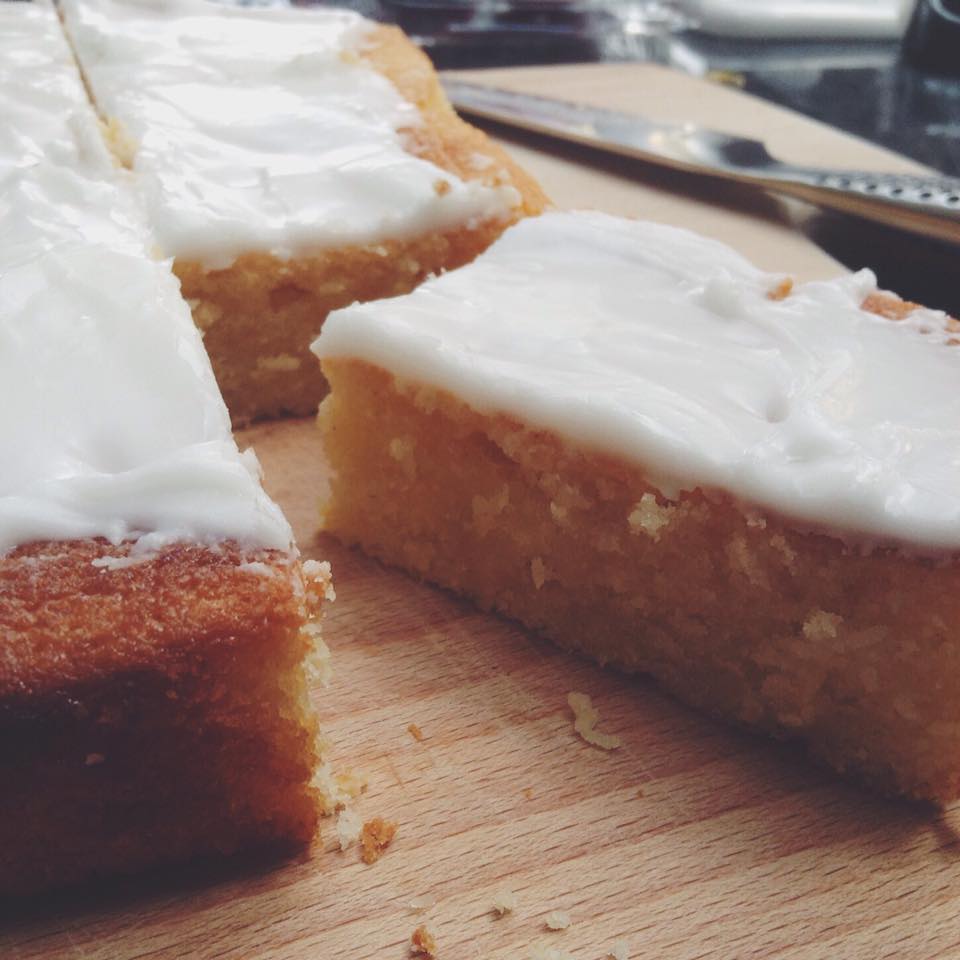
Over summer, I am a nanny to two wonderful boys. They’re seven and five and I’ve looked after them every school holiday for two years – it’s the best job I can imagine having at this stage in my life and is both fun and rewarding in equal measures. We baked a lemon cake yesterday (at their request!), and then today, we cycled to the park, pushed a big swing pretended we were in James’ Bond whilst spinning on a spinny thing, and fell about on the grass. I started thinking about all of this kind of stuff again.

11796471_769455126500492_7053651503834393497_n

Knowing the boys as long as I have, and spending so much time with them every school holiday, means that we have a fairly solid relationship. I hug them, they hug me, we play fight, laugh, joke, and enjoy each other’s company. They’re not my children (despite many museum workers calling me ‘Mum’ in the past), but they’re good practice for if I ever have my own.

Baking is something my Mum taught me as a child. She spent hours teaching me how to use a mixer, how to break eggs, and how to remember various recipes. Teaching the boys how to bake is a joy, and they get better each time we do it – they’re pretty good at it now, and love it just as much as I did at their age. Going to the park is something my parents and I did a lot as when I was a child. They must have spent hours pushing me on swings and helping me conquer climbing frames.

My entire attitude towards children and the skills that I pass onto them come from my experiences and upbringing, and especially from my parents. My Mum probably won’t be there in person if I ever have kids – I probably won’t be able to beg her for some childcare favours when I need some sleep. But so much of my Mum is in me, and has shaped who I am, that in some small way she will be there – and that’s something that cancer can never take away.

Each time I let one of the children lick out the mixing bowl, they receive some of my Mum’s baking passion. Whenever they fly high on a swing, they’re experiencing some of Mum’s joy through my own love of parks. Whenever they’re making stuff, I hope they’ll experience some of Mum’s patience for my various crafting endeavours, something I do my best to remember when I have to iron countless Hama bead creations, or make multiple loom band animals.

Processed with VSCOcam with t1 preset

Cancer might be taking my Mum’s body, but it will never take my Mum. It will never take all the things she taught me (not to mention other people), the impact she’s leaving in the medical world, or the impression she’s made on everyone she’s ever met. Cancer can’t take her love for me and my brothers, her pride in what we achieve, or her hopes and dreams for our futures. Cancer can’t destroy the memories I have of her and our family, of holidays, hill climbing and funny voices when we read bedtime stories as kids.

Cancer makes no sense on an emotional level, and I don’t think it’s something I will ever truly understand. But, when I find myself on my bum in the middle of a park having lost a play fight with two adorable boys – I know that my Mum, her attitude of always getting ‘stuck in’ and her willingness to do anything with the three of us, however silly it might make her look, will always be with me.

Featured: http://www.huffingtonpost.co.uk/naomibarrow/terminal-cancer_b_7899680.html